
Contents
Overview
Arctic Monkeys are a Sheffield-born rock band that exploded onto the scene in the early 2000s, fundamentally altering how new music found its audience. Formed in 2002, the core lineup solidified around Alex Turner's distinctive lyricism and vocal delivery, Matt Helders' powerhouse drumming, Jamie Cook's guitar work, and the steady basslines of Nick O'Malley, who took over from original bassist Andy Nicholson. They are celebrated for their sharp wit, observational lyrics, and a genre-bending sound that has kept fans guessing for two decades. Their initial rise, fueled by early internet buzz and fan-shared demos, predated many of the digital marketing strategies now commonplace in the music industry.
🎶 Their Sound Evolution
The sonic journey of Arctic Monkeys is a masterclass in artistic evolution. They burst forth with the frenetic, guitar-driven energy of Whatever People Say I Am, That's What I'm Not, a sound deeply rooted in the post-millennial indie rock scene. However, they quickly shed this skin, venturing into more complex, melodic territories with Favourite Worst Nightmare and the psychedelic-tinged Humbug, produced by Josh Homme. Subsequent albums like AM saw them embrace a slicker, R&B-infused rock sound, while Tranquility Base Hotel & Casino and The Car plunged into lounge-pop and orchestral arrangements, showcasing Turner's growing confidence as a conceptual songwriter.
🌟 Key Albums & Eras
Navigating the Arctic Monkeys discography is like charting a course through distinct artistic phases. Their debut, Whatever People Say I Am, That's What I'm Not (2006), remains a touchstone for its raw, observational lyrics capturing a specific British youth culture, earning them a Vibe score of 92 for its cultural impact. AM (2013) marked a commercial zenith, achieving massive global success with hits like 'Do I Wanna Know?' and 'R U Mine?', solidifying their status as stadium-fillers. More recent works, Tranquility Base Hotel & Casino (2018) and The Car (2022), represent a deliberate pivot towards more introspective, cinematic soundscapes, polarizing some long-time fans but earning critical acclaim for their ambition.
🎤 Live Performance Vibe
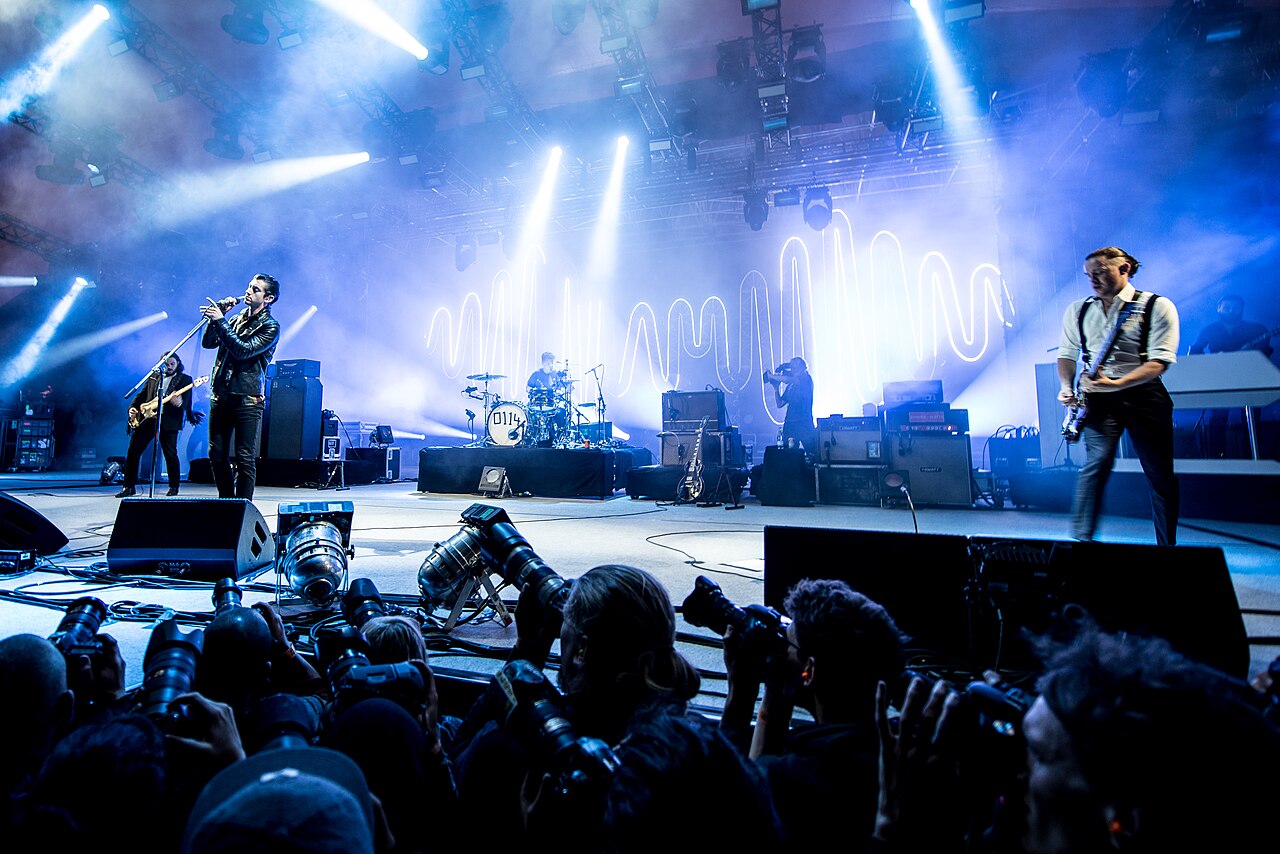
Seeing Arctic Monkeys live is an experience that shifts with the band's current artistic direction. Early shows were known for their explosive energy and mosh pits, reflecting the raw punk-infused rock of their debut. As their sound matured, so did their stage presence, incorporating more elaborate lighting and a sophisticated, often theatrical, performance style. Alex Turner, in particular, has cultivated a charismatic, almost crooner-like persona, especially during the Tranquility Base Hotel & Casino and The Car eras. Expect a setlist that balances beloved anthems with deeper cuts, delivered with a confidence honed over countless sold-out tours worldwide.
📈 Commercial Success & Impact
Arctic Monkeys have achieved significant commercial success, with multiple UK number-one albums and singles. Their ability to consistently chart high, even as their sound has become more experimental, speaks to a dedicated global fanbase and a knack for crafting memorable hooks. Their influence on subsequent generations of indie and rock bands is undeniable, particularly in how they leveraged early internet platforms to build momentum. The band's consistent chart performance and extensive touring have cemented their status as one of the most commercially viable rock acts of the 21st century.
🤔 Controversies & Criticisms
While largely celebrated, Arctic Monkeys haven't been immune to criticism. The shift away from their early, guitar-heavy sound has alienated some fans who miss the raw energy of their debut. Alex Turner's evolving lyrical themes and vocal delivery have sometimes been perceived as pretentious or detached from their working-class roots. Furthermore, the band has faced scrutiny over their touring schedules and perceived lack of engagement with fans at times, a common point of contention for many established artists navigating the demands of global stardom.
💡 Influences & Legacy
The musical DNA of Arctic Monkeys is a fascinating blend of influences. Early on, they drew from the likes of The Strokes, The Libertines, and The White Stripes, channeling a similar lo-fi, guitar-centric aesthetic. However, Alex Turner's lyrical prowess often evokes comparisons to Morrissey and Pulp's Jarvis Cocker, with his keen eye for social commentary and everyday detail. As their sound has broadened, influences from David Bowie, The Last Shadow Puppets (Turner's side project), and even classic crooners have become apparent, showcasing a deep appreciation for diverse musical traditions.
🚀 Where Are They Now?
As of their latest album, The Car (2022), Arctic Monkeys continue to push their artistic boundaries. While stadium tours remain a staple, the band seems less concerned with replicating past glories and more focused on exploring new sonic territories. Alex Turner's solo work and side projects suggest a continued interest in cinematic and experimental music. The future likely holds further evolution, potentially alienating some while captivating new audiences with their unwavering commitment to artistic exploration, leaving fans to wonder what unexpected direction they'll take next.
Key Facts
- Year
- 2002
- Origin
- Sheffield, England
- Category
- Music
- Type
- Band
Frequently Asked Questions
What is Arctic Monkeys' most commercially successful album?
AM (2013) is widely considered their most commercially successful album. It achieved multi-platinum status in several countries and spawned massive global hits like 'Do I Wanna Know?', 'R U Mine?', and 'Why'd You Only Call Me When You're High?'. The album's slick production and R&B-infused rock sound resonated with a broad international audience, propelling the band to new heights of global fame and cementing their status as stadium headliners.
How did Arctic Monkeys gain initial popularity?
Arctic Monkeys gained initial popularity through the burgeoning internet and fan-driven promotion during the 'blog rock' era of the early 2000s. Unsigned, they shared demos online, which were rapidly disseminated through fan websites and music blogs. This organic buzz led to significant media attention and a record deal, marking a significant shift in how new bands could achieve mainstream recognition without traditional industry backing.
What is the current lineup of Arctic Monkeys?
The current lineup of Arctic Monkeys consists of Alex Turner (lead vocals, guitar), Matt Helders (drums, backing vocals), Jamie Cook (guitar), and Nick O'Malley (bass, backing vocals). O'Malley joined the band in 2006, replacing original bassist Andy Nicholson. This lineup has remained consistent since O'Malley's arrival, providing a stable core for the band's extensive recording and touring career.
Which albums represent Arctic Monkeys' sound evolution?
Arctic Monkeys' sound evolution is best traced through key albums. Whatever People Say I Am, That's What I'm Not (2006) is raw indie rock. Humbug (2009) introduced psychedelic and stoner rock elements. AM (2013) embraced a more polished, R&B-influenced rock sound. Tranquility Base Hotel & Casino (2018) marked a significant departure into lounge pop and space-age themes, while The Car (2022) further explored orchestral and cinematic arrangements.
Are Arctic Monkeys still together?
Yes, Arctic Monkeys are still together and actively releasing music and touring. Their latest studio album, The Car, was released in October 2022, followed by extensive international tours. While individual members pursue side projects, the band remains a cohesive unit, continuing to explore new musical directions and engage with their global fanbase.
What are some common criticisms leveled against Arctic Monkeys?
Common criticisms often focus on the band's stylistic shifts, with some fans lamenting the move away from the raw energy of their early work. Alex Turner's lyrical and performance style has occasionally been labeled as pretentious or overly theatrical. Additionally, like many globally successful bands, they sometimes face criticism regarding touring practices or perceived distance from their original fanbase.