
Contents
Overview
The saga of AMD versus Intel began not as a direct confrontation, but as a strategic dance around licensing. Intel, having secured the crucial x86 instruction set license, initially held a near-monopoly. AMD, a smaller player, secured its own x86 license, setting the stage for a long-term, often asymmetrical, competition. Early decades saw AMD primarily as a second-source manufacturer for Intel, but it began developing its own compatible processors, notably the Am386 and Am486, directly challenging Intel's market. Intel's response, including the Pentium line, intensified the rivalry, pushing both companies to innovate rapidly through the 1990s and early 2000s, with AMD often competing on price and core count while Intel focused on single-core performance and clock speeds.
⚙️ How It Works: Architecture Wars
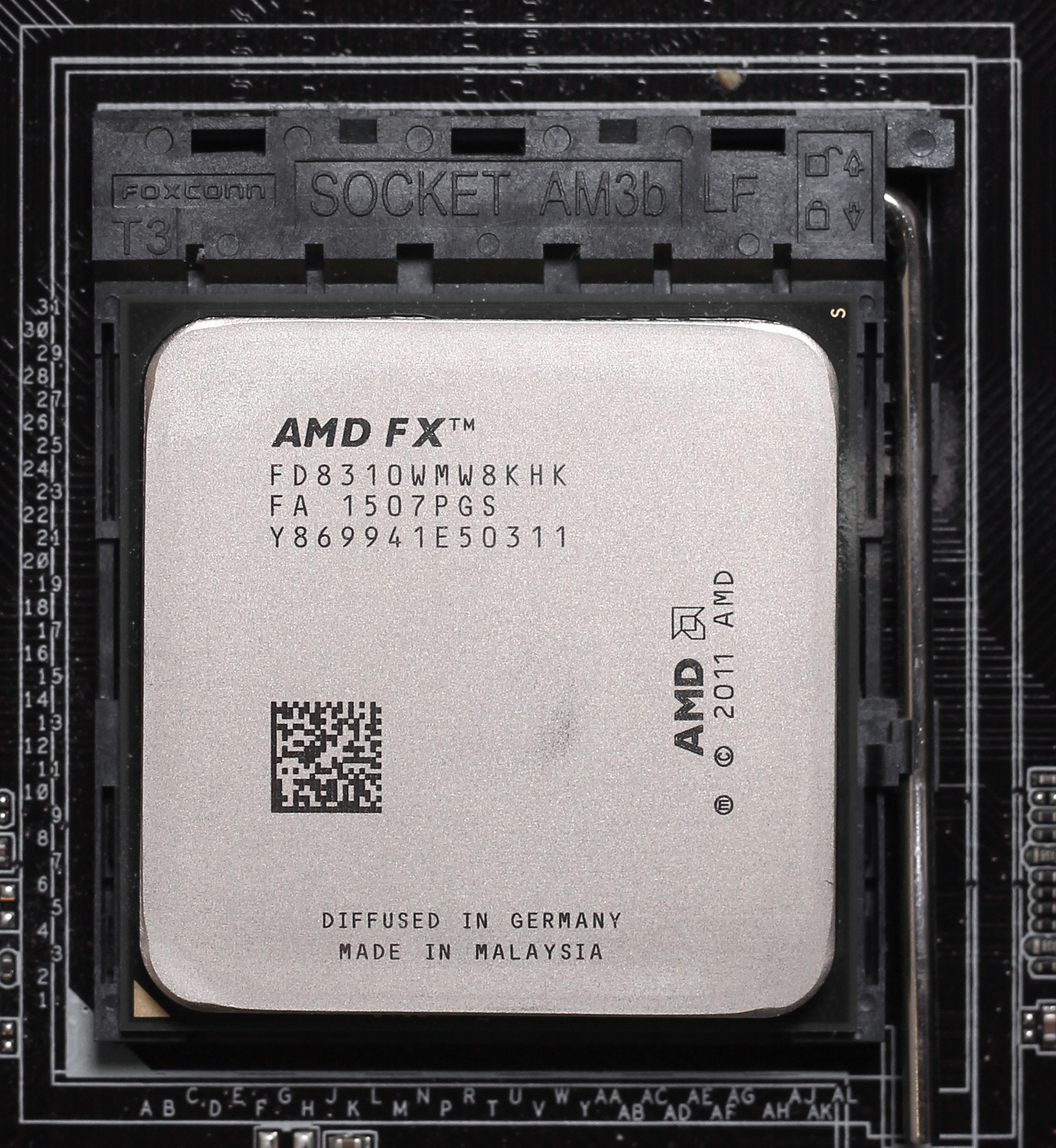
At the heart of the AMD vs. Intel rivalry lies a continuous architectural arms race. Intel's strategy often involved incremental improvements on established microarchitectures, such as Sandy Bridge and Skylake, focusing on power efficiency and integrated graphics. AMD, conversely, has sometimes taken bolder architectural leaps, like the Bulldozer architecture (which powered the AMD FX line) and, more successfully, the Zen architecture. Zen's modular design, featuring chiplets, allowed AMD to scale core counts dramatically and achieve competitive performance per watt, directly challenging Intel's long-standing lead in high-performance computing and server markets with its EPYC and Ryzen processors.
📊 Key Facts & Numbers
The market share battle between AMD and Intel has seen dramatic shifts. For years, Intel commanded a significant portion of the CPU market, a dominance that seemed unassailable. However, AMD's market share in desktop CPUs has seen substantial growth. In the server market, Intel's share has seen significant erosion, with AMD's EPYC processors capturing a notable percentage. Intel's revenue in 2022 was substantial, while AMD's, boosted by its acquisition of Xilinx, has shown significant growth trajectory.
👥 Key People & Organizations
Key figures have shaped this enduring rivalry. Gordon Moore and Robert Noyce co-founded Intel, establishing its early dominance. Jerry Sanders was instrumental in positioning AMD as a formidable competitor. More recently, Lisa Su, as CEO of AMD, has been credited with orchestrating the company's remarkable turnaround with the Zen architecture, directly challenging Intel's leadership. Pat Gelsinger, who returned as Intel CEO, faces the immense task of revitalizing Intel's manufacturing prowess and regaining market share against a resurgent AMD and increasing competition from ARM-based designs.
🌍 Cultural Impact & Influence
The AMD vs. Intel narrative has become deeply ingrained in PC culture. For gamers and enthusiasts, the choice between an Intel Core i7 or an AMD Ryzen 7 often dictates performance benchmarks and overclocking potential, fueling countless online debates and benchmark comparisons on platforms like YouTube and Reddit. This rivalry has also influenced the broader technology ecosystem, pushing companies like Nvidia to innovate in graphics processing units (GPUs) to complement or compete with integrated solutions. The perception of value and performance leadership has oscillated, creating distinct eras of brand loyalty and consumer preference, from the 'Intel Inside' campaigns to AMD's 'The Future is Fusion' messaging.
⚡ Current State & Latest Developments
As of early 2024, the competition remains fierce. Intel is aggressively pursuing its 'IDM 2.0' strategy, aiming to regain manufacturing leadership with new fabrication processes like Intel 4 and Intel 3, while also expanding its foundry services business. AMD continues to push its Zen architecture with new generations like Zen 4 and Zen 5, focusing on both consumer CPUs and high-performance server chips, alongside its growing presence in GPUs and adaptive computing through the Xilinx acquisition. The emergence of specialized computing hardware adds new dimensions to their battleground, moving beyond traditional CPU dominance.
🤔 Controversies & Debates
Significant controversies have marked the rivalry. Intel has faced antitrust investigations and accusations of anti-competitive practices in various markets, including Europe and South Korea, leading to substantial fines. AMD has also been criticized for performance missteps, such as the Bulldozer architecture's initial reception, which failed to meet performance expectations against contemporary Intel offerings. Debates often rage over the true meaning of 'core count' versus 'thread count,' the efficiency of different architectures, and the transparency of benchmark methodologies used by both companies. The ongoing reliance on TSMC for manufacturing by both AMD and, increasingly, Intel itself, also sparks discussions about supply chain dependencies and national technological sovereignty.
🔮 Future Outlook & Predictions
The future of AMD vs. Intel is likely to be defined by the expansion into new computing paradigms. Intel's aggressive foundry strategy aims to position it not just as a chip designer but as a major manufacturing service provider, competing directly with TSMC and Samsung. AMD, under Lisa Su, is expected to continue its strong product cadence, potentially leveraging its FPGA and AI capabilities more aggressively. The increasing importance of AI processing, alongside the continued demand for high-performance computing in areas like cloud gaming and scientific research, will force both companies to innovate beyond traditional CPU designs. The threat from ARM-based processors, particularly in mobile and increasingly in laptops and servers, remains a significant factor, potentially reshaping the competitive landscape once again.
💡 Practical Applications
The practical applications of AMD and Intel processors are ubiquitous. Intel's Core i3, i5, i7, and i9 processors are found in the vast majority of laptops and pre-built desktops, powering everyday tasks, office productivity, and mainstream gaming. AMD's Ryzen series offers compelling alternatives, particularly for content creators and gamers seeking higher core counts and competitive pricing. In the server market, Intel's Xeon chips have long powered data centers, while AMD's EPYC processors are increasingly chosen for their high core density and performance-per-dollar in cloud computing, high-performance computing (HPC), and AI workloads. Both companies also supply chips for embedded systems, gaming consoles like the PlayStation 5 and Xbox Series X/S, and specialized applications.
Key Facts
- Category
- technology
- Type
- debate